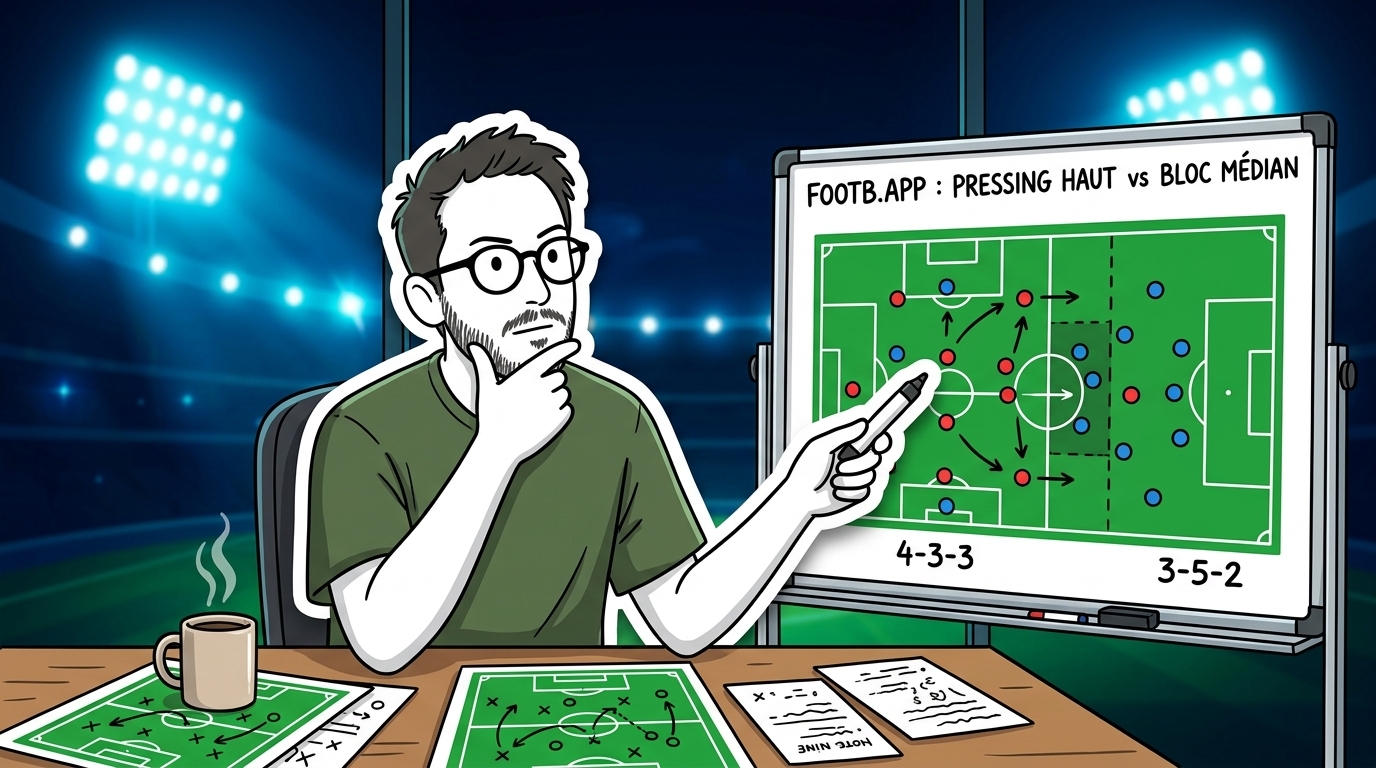
1. Evolution of Pressing: Collective Choreography
Pressing is not running frantically toward the ball. It is the coordinated compression of time and space. Modern teams manipulate cover shadows: curved runs that simultaneously close down the ball carrier while cutting off passing lanes to central midfielders.
2. Pressing Triggers: The Traps
Elite pressing structures lie in wait for specific visual cues (pressing triggers):
- Backward pass to the goalkeeper or center-back: Body shape faces backward, restricting passing angles.
- Heavy touch or bouncing ball: The receiver must look down at their feet, losing peripheral awareness.
- Pass to the sideline (touchline as an extra defender): The sideline immediately eliminates 180 degrees of escape angles.
3. The Mid-Block: Strategic Patience and Vertical Pounce
While the high press captures headlines, the compact mid-block (deployed between 28m and 35m from goal) remains the most resilient framework against possession-heavy sides. By refusing to commit into the opposition half, mid-blocks deny depth while baiting opposing fullbacks high, leaving massive transitional corridors upon turnover.
4. Rest-Defense (Restabsicherung)
The true measure of an elite attacking team is not how they attack, but how they organize their rest-defense during attacking phases. Formations like the 3-2 rest-defense structure position five outfield players behind the ball to immediately extinguish counter-attacks through tactical counter-pressing.